TC Advisory Ltd. · Caledon, Ontario · Commercial strategy · Operations · Acquisitions
Working in the business and working on it are two different jobs.
Most leadership teams only have time for one. I help with the other.
It starts with a conversation → …and a walk through the building.Not broken.
Busy.
Everyone plans to work on the business. Then the day starts. Processes get patched. Departments build workarounds. People compensate for systems nobody has time to fix. The machine still runs and the orders still ship — and somewhere inside it, one process or one supplier agreement is quietly holding everything else back.
That doesn't need more effort. It needs a week of somebody's undivided attention.
I've spent thirty years inside businesses other people built — manufacturing and industrial distribution. Operations, commercial strategy, ERP, suppliers, acquisitions.
Businesses like yours were my customers. I know where distributor margin comes from — and where it quietly leaks — because I didn't learn distribution from a case study. I lived inside it for thirty years.
It's usually already in the building
The capacity you're about to pay for, you probably already own.
Where it hides, in the businesses I've worked in
I've watched a manufacturer come within weeks of signing for capital equipment it did not need — the capacity was already on the floor, unscheduled. Growth funded from inside the business, not from the bank. Three industries, one mistake.
Specific results, and the numbers behind them, are for the conversation — not the website.
What owners bring me in for
Different names for the same job: find the money, then decide what to do with it.
- Working capital
- Cash out of inventory, terms and freight. The money is usually already in the building; somebody just has to count it.
- Commercial strategy
- Selling more, and differently, to the customers you already have — and finding the adjacent ones nobody is serving.
- Acquisition diligence
- What it's worth, what it will cost you, and what breaks after you own it.
- Scaling for sale
- Owner-independence, clean numbers, and the things that move the multiple rather than the earnings.
- Shareholder transitions
- The unemotional case, made with facts, by someone who isn't at the dinner table.
- Fractional COO
- Operating leadership without adding the seat.
- Key hires
- Define the role properly, hire well, and get them productive inside ninety days.
“Two great years, one fair year, two lean ones — and everybody runs the business as though it's always a lean one.”
Which is why I usually start with cash. Money found inside the business takes the fear out of every decision that comes after it.
Six questions
Not a diagnostic. Just the six that usually find the money.
Do you know your freight per order, or only your total freight bill?
Which products lose money on every shipment?
Which of your loss leaders were chosen?
Can someone produce dead stock and inventory turns this week, without it becoming a project?
If you took six months off, would revenue fall more than ten percent?
What did you decide not to do this quarter?
You don't need me to answer these. What's worth a conversation is which one to answer first — and what it costs while it waits.
How this usually works
I work with your team until they can do it without me.
Not over your team, and not instead of them. The last engagement I ran for two years, I handed over as a playbook — because a roadmap nobody owns is a document, not a change. The retainer costs a fraction of a senior hire and carries no seat, no salary and no ramp. What you get for it is thirty years of pattern recognition, on call, for the handful of decisions each quarter where being wrong is expensive.
And if you're heading for a sale: diligence consumes the owner, so the business softens exactly when its earnings are being priced. Every point of margin lost in the process gets multiplied against you at the table.
About Thomas
I grew up in Northern Ontario and spent my formative years in a small southern Ontario community, where my working life started running trap nets for the Ministry of Natural Resources. I spent the next thirty years working in, or consulting to, businesses other people built.
Distribution · Loyalty · Manufacturing · Retail · Homebuilding
Most of that time has been spent in operations and commercial strategy — inventory, freight, ERP, suppliers, acquisitions, growth and the problems that sit between departments because nobody quite owns them.
I spent three and a half years running a business with considerable autonomy and did some of the best work of my career. But the work I've always found most rewarding is consulting: walking into different businesses, understanding how they work, and solving the problems everyone knows are there but nobody has time to get to because the EBITDA dragon needs to be slain again — month after month, quarter after quarter.
That's why I started TC Advisory.
I live north of Toronto with my wife and daughter. I have an MBA and a CMA/CPA, both paid for by an employer who bet on me. I golf on Tuesdays, and I'm still better at diagnosing a business than I am at playing guitar — although I've improved at both.
Who you'd be working with
You get the person you met.
Not a partner in the pitch and an analyst on the project. One person, thirty years inside businesses like yours, doing the work himself.
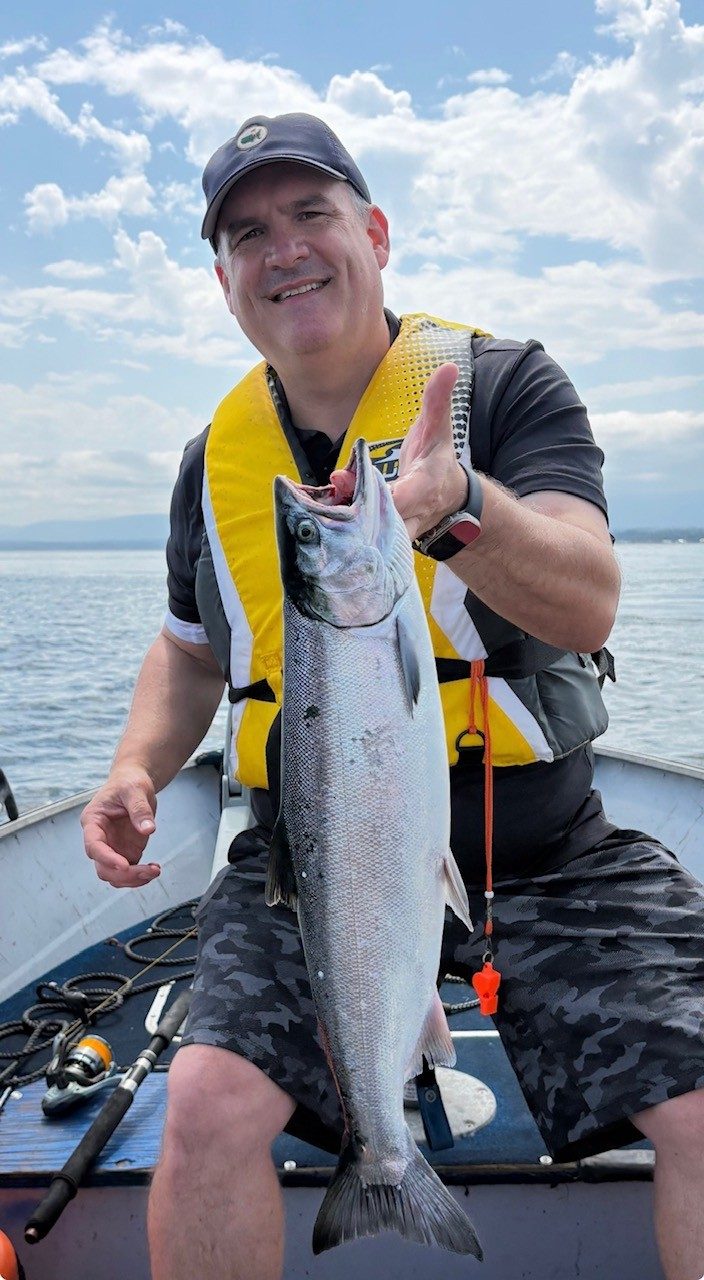
Off the clock: I live north of the city in Caledon with my family. Golf when the weather allows; salmon fishing with my dad on the west coast when it doesn't — the fish is a Campbell River coho.